
AI Governance based on EU AI Act
Why AI Governance is important for companies to reliably implement the EU AI Act
“A computer can never be held accountable, so a computer must never make a management decision.”
This quote from an IBM training presentation from 1979 is more relevant today than ever.
Today, it is not computers in the traditional sense, but AI systems that are increasingly preparing or influencing management-related decisions. Some companies see significant risks in this, while others see, above all, great potential.
Woodmark Consulting helps companies harness this potential safely, responsibly, and effectively through AI governance.
AI is constantly evolving and is increasingly becoming a management issue. It is providing ever-greater support to people in their daily lives and in the workplace, becoming more complex, and increasingly influencing business processes and decisions - whether in marketing, software development, customer service via chatbots, or management decisions. The EU AI Act establishes a regulatory framework for this. Within companies, AI governance is responsible for implementing these requirements while ensuring that the company remains compliant with new laws, regulations, and requirements in the future.
How can management steer the use of AI in a way that enables innovation while reliably ensuring security, accountability, auditability, and compliance with regulatory requirements such as the EU AI Act?
AI governance provides the essential framework for this and makes AI initiatives transparent, controllable, and future-proof for management. This applies today with regard to the EU AI Act and in the future when dealing with additional regulatory, business, and organisational requirements.

At a Glance
Technical problems are often just the tip of the iceberg.
The real risks often lie beneath the surface:
- Violations of regulatory requirements
- Loss of corporate knowledge and sensitive data
- Reputational damage among customers and partners
- Poor decisions with business implications
AI governance helps make these risks visible and manageable at an early stage.
For management, the use of AI is not just about technical weaknesses or hallucinations. These are usually just visible symptoms of deeper-rooted risks. The key point is that uncontrolled use of AI can lead to significant business risks, such as regulatory violations, reputational damage, or the loss of customer trust. Especially in the context of the EU AI Act, it becomes clear that AI risks must not only be understood from a technical perspective but also managed strategically and safeguarded organisationally.

EU AI Act
Why it exists
The EU AI Act establishes, for the first time, a uniform legal framework for the use of artificial intelligence in Europe. The goal is to promote innovation and competitiveness while mitigating risks to people, businesses, and society. Since the European Commission believes that existing laws are insufficient for this purpose, the regulation takes a risk-based regulatory approach: The requirements for an AI system are determined by its risk and its potential impact on people, organisations, and fundamental rights.
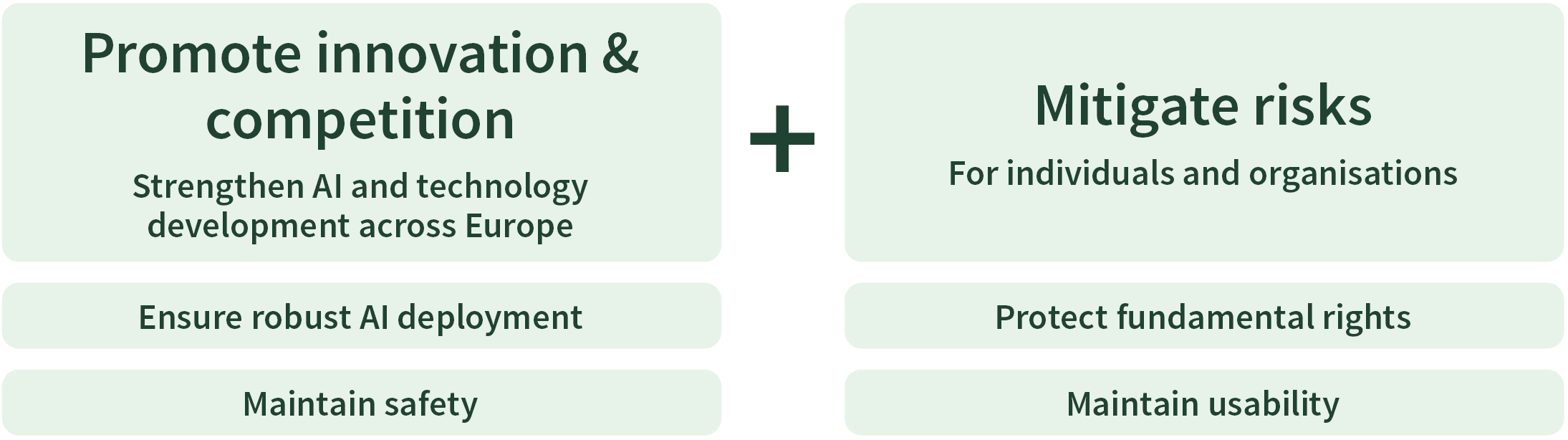
What companies must specifically do
From an AI governance perspective, the EU AI Act plays a central role, as it requires companies to ensure transparency, risk management, accountability, documentation, and traceability.
Woodmark Consulting’s AI governance framework therefore considers the EU AI Act to be the primary regulatory framework. At the same time, it integrates the requirements of related governance areas such as data protection, risk management, compliance, and information security to enable holistic and sustainable management of AI systems.
From planning to implementation
The requirements of the EU AI Act cannot be met through technical measures alone.
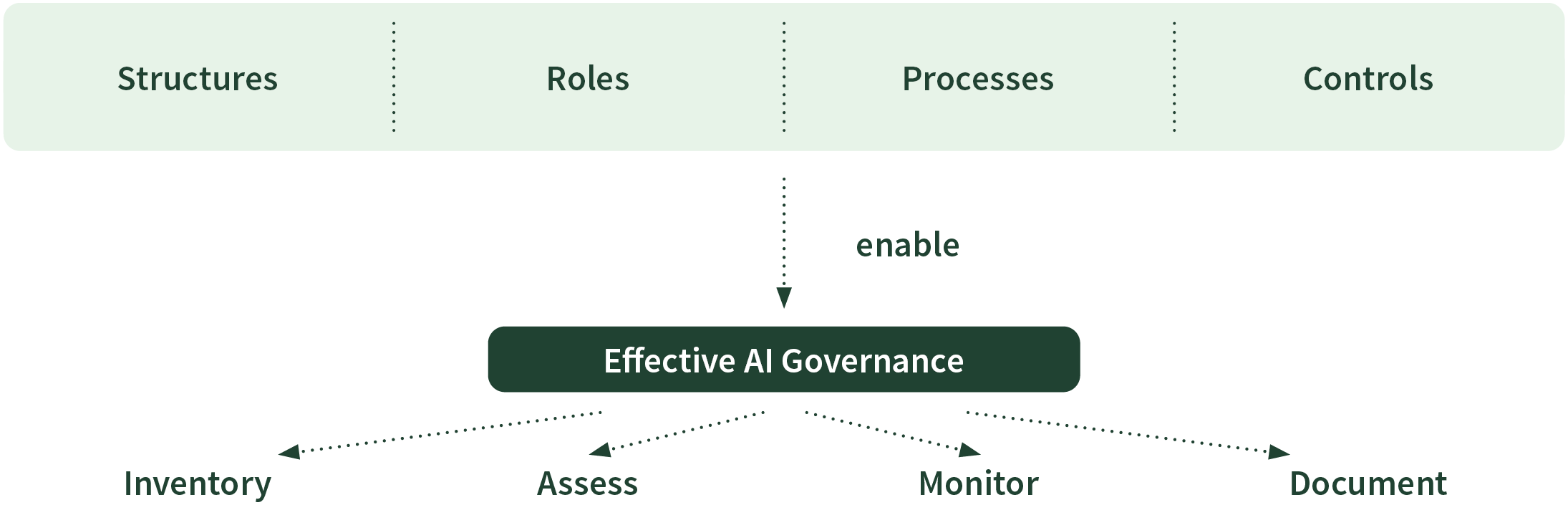
Companies need clear structures, defined responsibilities, repeatable processes, and appropriate control mechanisms to manage the use of AI in a sustainable manner.
It is only the interplay of these organizational elements that lays the foundation for effective AI governance and enables the traceable, auditable, and compliant use of AI systems throughout their entire lifecycle. For management, this involves far more than mere compliance with regulatory requirements: Only structures, roles, processes, and controls create the conditions for effective AI governance and the controlled, scalable use of AI within the company.
Who is affected, and what are their obligations?
The EU AI Act affects nearly every company that develops, offers, or uses AI systems.
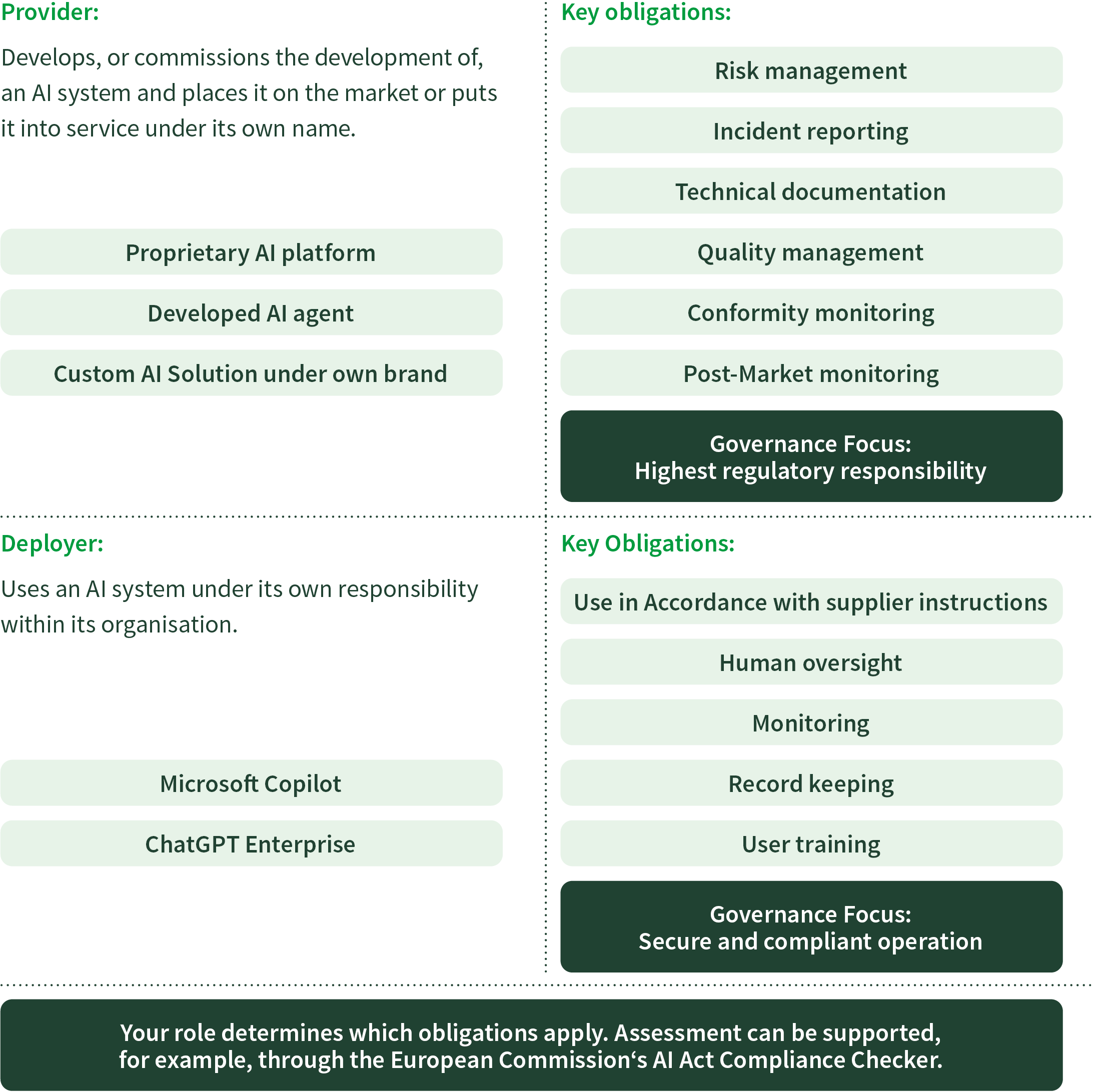
However, the specific requirements that apply depend on the role a company plays in relation to an AI system. Therefore, before any governance assessment, it should first be determined whether the company acts as a provider or an operator, as this results in different obligations, responsibilities, and documentation requirements. Before any governance assessment, it must therefore be determined what role the company plays in relation to the respective AI system. Ultimately, the company’s specific role determines which regulatory requirements must be met and where the focus of AI governance lies.
The EU AI Act distinguishes, in particular, between two key roles
The EU AI Act defines clear responsibilities for different roles in dealing with AI systems. At the heart of the EU AI Act are, in particular, the roles of the provider and the operator.
Providers develop AI systems, place them on the market under their own name, and put them into operation. They bear the most comprehensive regulatory obligations, particularly for high-risk systems.
Operators deploy AI systems within the EU under their own responsibility and ensure their safe, compliant, and monitored use within the organization. In addition, the AI Act establishes audit and due diligence obligations for other roles, such as distributors and importers. Clearly defining one’s own role is therefore a key prerequisite for any effective AI governance, as it determines which obligations apply.
Self-Test
What role do we play: provider or operator?
Answering this question is the first step toward understanding your obligations under the EU AI Act. The requirements for governance, risk management, documentation, monitoring, and record-keeping depend on your specific role. Companies should therefore conduct this assessment as early as possible in order to correctly identify regulatory requirements and derive appropriate governance measures.
To provide initial guidance, the European Commission offers a free tool called the EU AI Act Compliance Checker. This tool allows companies to determine whether they are considered a provider or operator of an AI system in a given use case and what regulatory obligations arise from that.
European Commission Compliance Checker:
EU AI Act Compliance Checker | AI Act Service Desk
What AI do we use in our company? Transparency, not secrecy
Effective AI governance begins with transparency.
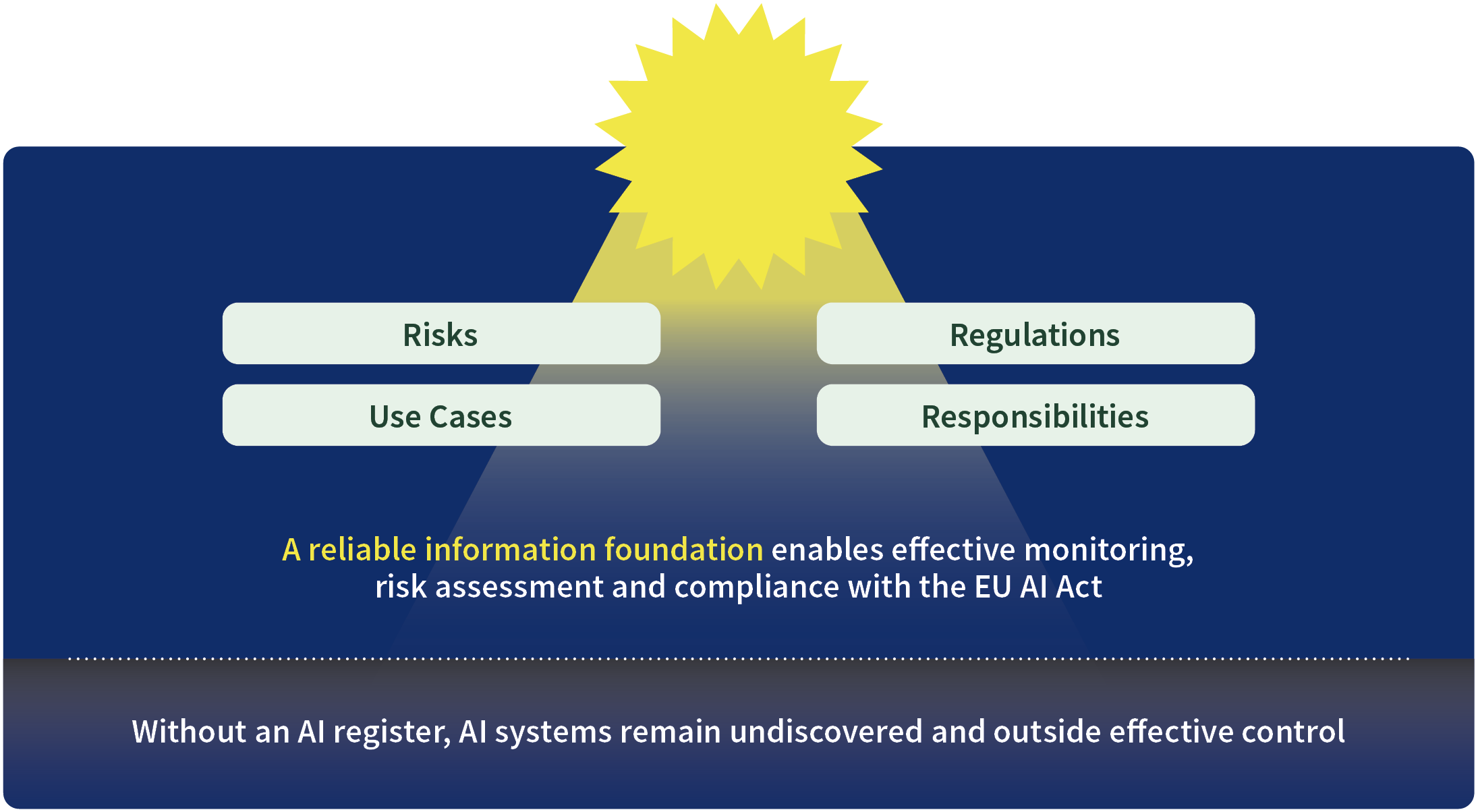
Companies need to know which AI systems are in use, what use cases they are applied to, what risks are associated with them, and who is responsible. Only a comprehensive overview of the AI solutions in use can lay the foundation for risk assessment, monitoring, compliance, and the sustainable implementation of the requirements of the EU AI Act.
Without a centralized AI inventory, systems often go undetected, responsibilities remain unclear, and risks are difficult to manage. Transparency regarding the AI in use is therefore not only a regulatory requirement but also a prerequisite for the controlled and secure use of AI within an organization.
What dependencies exist?
The use of AI is not a one-time project, but rather a continuous process of change. Two aspects are particularly crucial in this regard:
New AI systems must be integrated into existing governance processes, from risk assessment through to approval. At the same time, AI governance must not be based exclusively on the EU AI Act, as additional requirements such as those stemming from the GDPR or industry-specific regulations may be introduced at any time. Effective AI governance ensures that both new AI systems and regulatory requirements are monitored and consistently integrated into existing structures.
It is crucial for management to identify regulatory developments early on and firmly embed them in AI governance. Guidance is provided by the European Commission’s AI Office and the European AI Board, while the Federal Network Agency in Germany plays a central role in oversight. Companies should therefore systematically evaluate new requirements, define responsibilities, and implement necessary measures in a timely manner.
The deadline
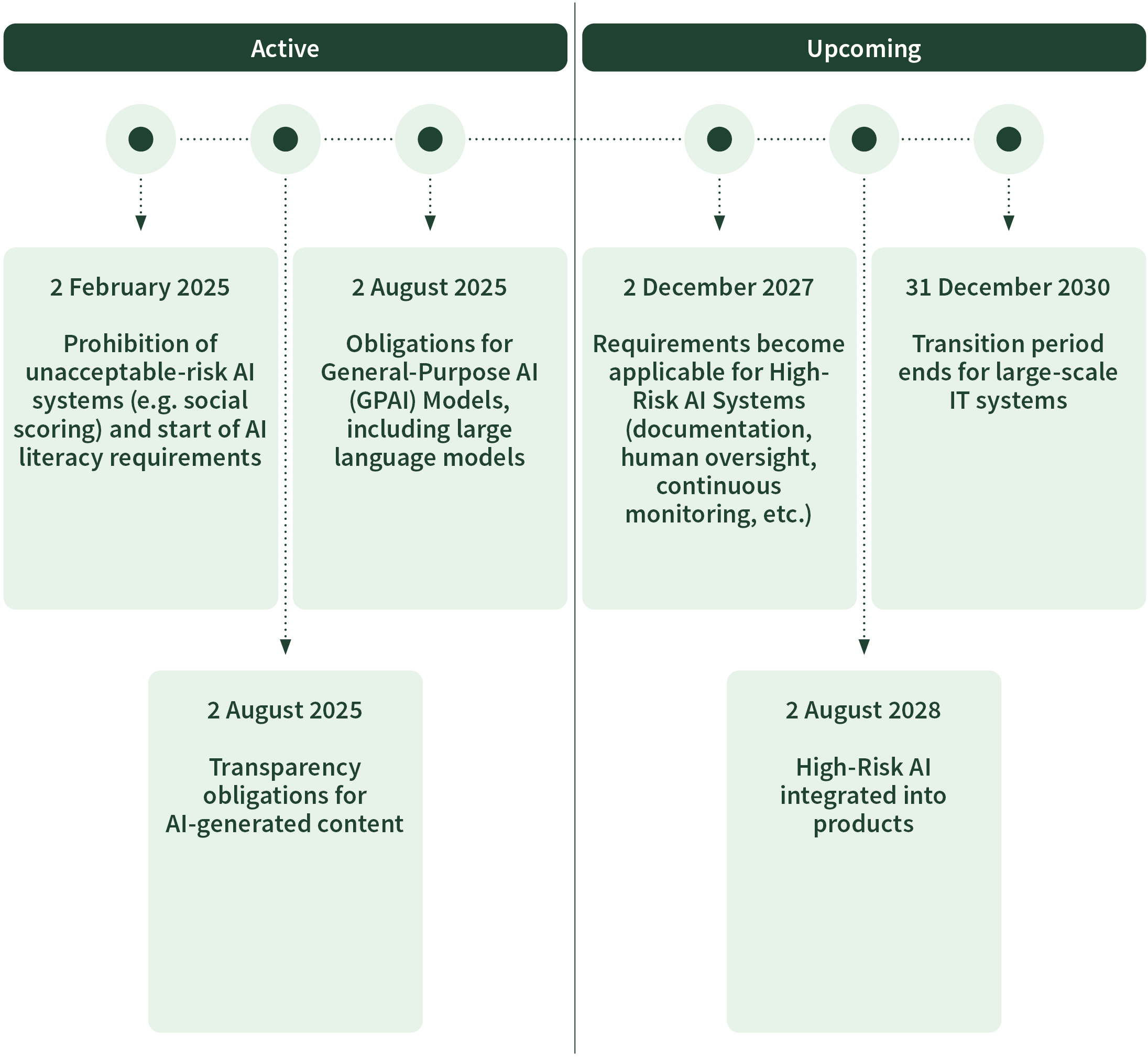
The EU AI Act will not take full effect immediately but will be phased in gradually through 2030. This overview shows which obligations take effect and when, so that companies can plan ahead, establish the necessary governance structures, and avoid time pressure during implementation.
By understanding the relevant deadlines, companies can integrate regulatory requirements into their processes, responsibilities, and control mechanisms in a timely manner, thereby minimizing compliance risks and the need for subsequent corrective actions.
EU AI Act - Fines
Violations of the EU AI Act can have significant financial and business consequences.
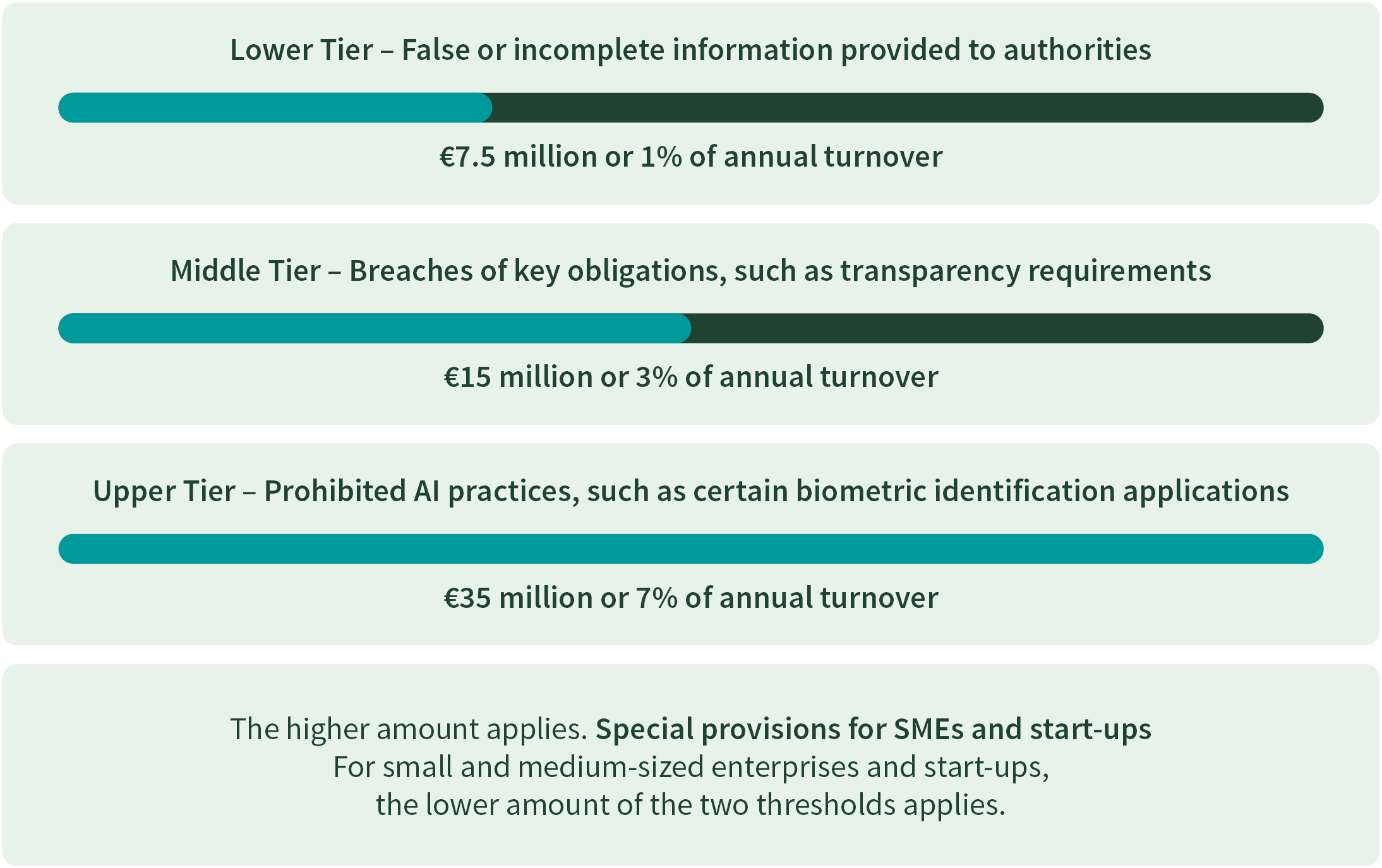
In addition to fines of up to 35 million euros or 7 percent of global annual revenue, companies face reputational damage, a loss of trust among customers and partners, and additional burdens resulting from regulatory audits and reporting requirements. For management, this makes one thing clear: The EU AI Act is not just a compliance issue, but an essential component of corporate risk and governance management.
The severity of potential sanctions depends on the nature of the violation. Prohibited AI practices are punished particularly severely, while inaccurate or incomplete disclosures to regulatory authorities can also result in significant penalties.
Transparent AI governance helps companies implement regulatory requirements early on and reduce financial risks.
What is AI Governance?
Definition
AI governance refers to the organizational and technical framework consisting of policies, processes, roles, responsibilities, and controls that companies use to manage the use of AI and ensure the safe operation of AI systems. It specifies which AI systems may be used, which risks must be assessed, what documentation is required, and who is responsible for decisions and operations. AI governance extends existing governance areas such as data protection, information security, and IT governance to include AI-specific requirements such as risk classification, transparency, human oversight, and traceability.
Objectives
The goal of AI governance is to provide management with a robust framework for managing the use of AI. AI systems should be deployed in a manner that is traceable, controllable, verifiable, and legally compliant throughout their entire lifecycle. This includes transparency regarding the AI systems in use, a shared understanding of relevant risks, compliance with legal requirements, effective control mechanisms, and the ability to document and audit decisions and processes. This provides management with the necessary foundation to make informed assessments of and manage the opportunities and risks associated with AI.
Why This Is Important for Management
For management, AI governance means one thing above all else: transparency, control, and the ability to act.
Those who understand and can manage risks, responsibilities, and the AI systems in use create the conditions necessary to deploy AI safely, efficiently, and with measurable business benefits. In particular, this involves:
- Determining risk tolerance: The basis for informed decisions
- Making clear decisions: Instead of uncertainty in AI deployment
- Promote in a controlled & scalable manner: Expand AI deployment in a targeted way
- Avoid heavy penalties: Reduce financial risks early on
Effective AI governance helps management combine innovation with control. It creates the conditions necessary not only to use AI in compliance with regulations, but also to leverage its potential for the company in a targeted and sustainable manner.
Without effective AI governance

AI risks relevant to management
Without effective AI governance, companies face risks that extend far beyond the technical level. These include erroneous or difficult-to-trace AI decisions, unclear responsibilities, a lack of human oversight, insufficient auditability, and a lack of transparency regarding the AI systems in use. For management, this means limited control and an increased risk of poor decisions, control gaps, and regulatory complaints.

Regulatory and financial consequences
Failure to meet legal requirements when using AI can result in heavy fines, legal disputes, and reputational damage. AI governance helps companies systematically translate the requirements of the EU AI Act into organizational structures, processes, and controls. This reduces compliance risks and ensures that regulatory obligations are met in a transparent manner.

Business impact
Inadequate or absent AI governance can lead to organizational, legal, and financial damage. These include a lack of transparency in the use of AI, an inability to provide evidence to regulatory authorities, and insufficient control over the risks and responsibilities associated with AI systems. For management, this results not only in compliance risks but also in limitations regarding trust, decision-making quality, and sustainable value creation through AI.
This is exactly where AI governance comes in: It creates transparency, control, and traceability before risks turn into costly damages.
Why do companies benefit from AI governance?
For many companies, AI governance is initially driven by regulatory requirements such as the EU AI Act.
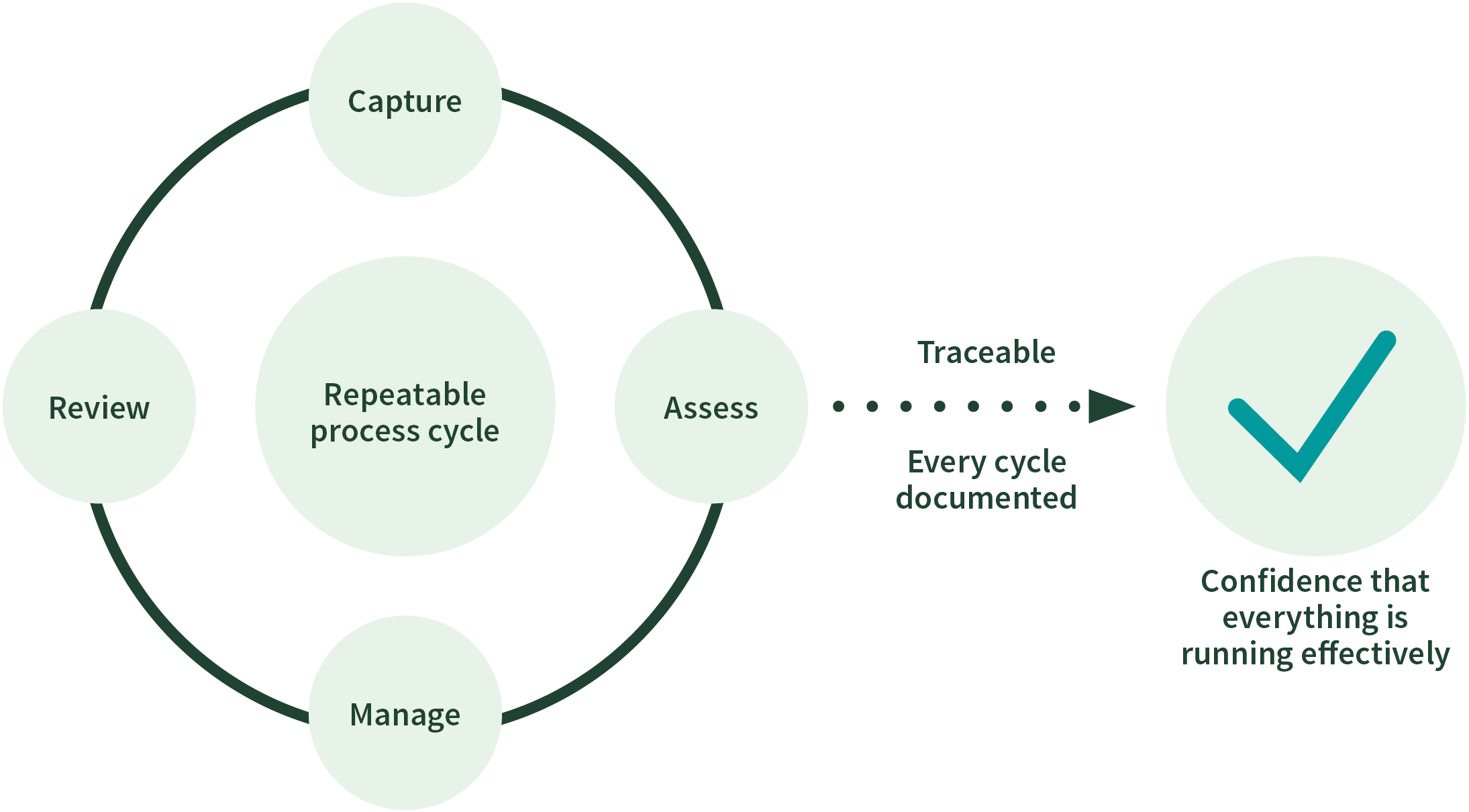
However, the true added value goes far beyond that. AI governance creates repeatable and traceable processes that make it possible to integrate new AI systems into the organization in a controlled, efficient, and consistent manner without having to start from scratch every time.
This fosters transparency, reliability, and scalability in the use of AI. Management, business units, and compliance officers gain the assurance that risks are assessed, decisions are documented, and regulatory requirements can be met on an ongoing basis. Repeatability and traceability thus become the foundation for secure, sustainable, and future-proof AI deployment.
Key takeaways at a glance:
- Creating transparency: Companies gain a complete overview of the AI systems in use, responsibilities, and risks.
- Ensuring long-term compliance: Legal requirements are met not just once, but continuously and in a traceable manner.
- Identifying risks early: Governance processes help systematically assess and manage regulatory, business, and operational risks.
- Scaling AI in a controlled manner: New AI applications can be introduced more quickly and consistently without circumventing existing control mechanisms.
- Staying future-ready: An established governance framework makes it easier to deal with future laws, standards, and new AI technologies.
What AI governance actually enables
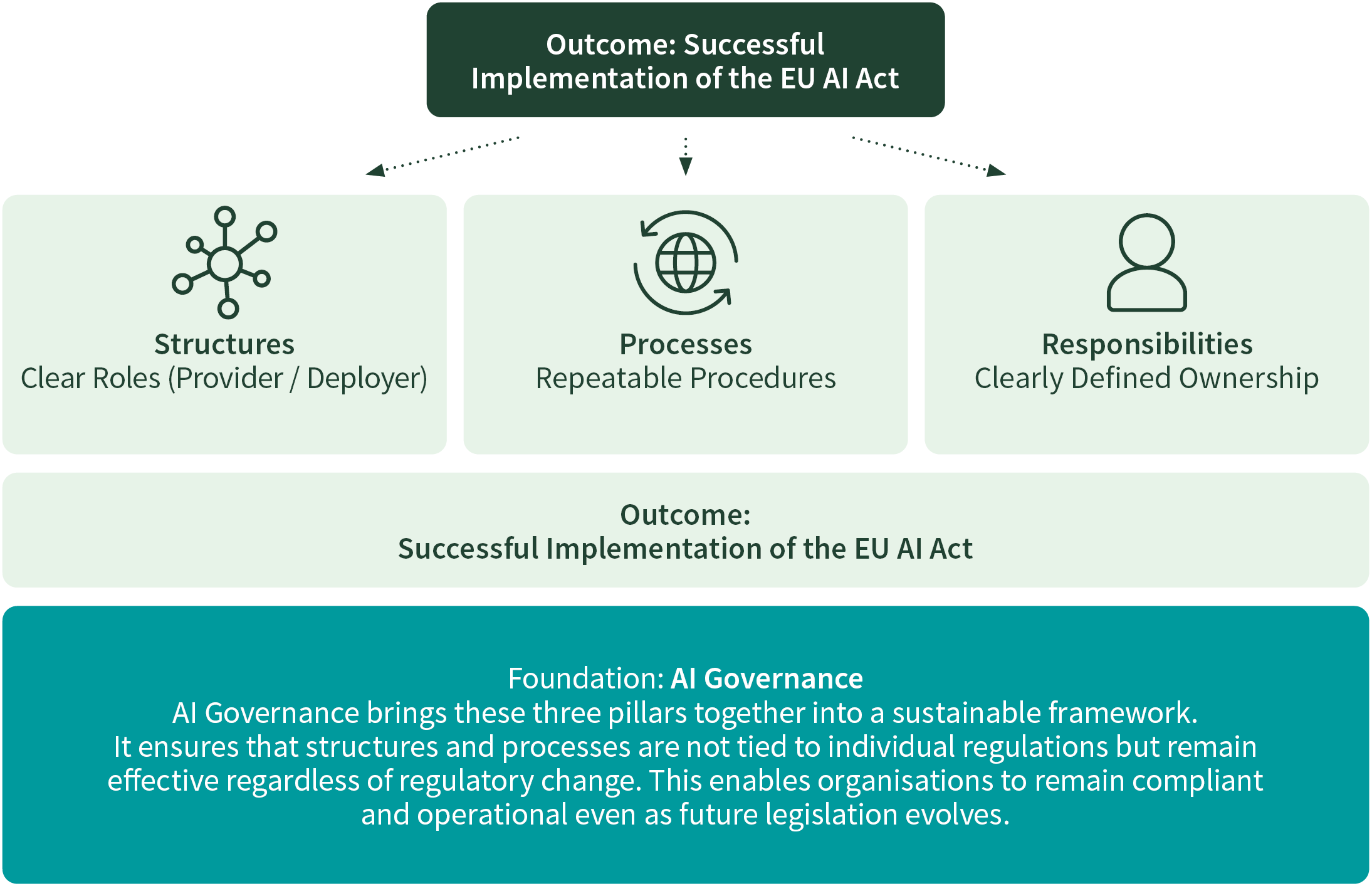
Structures, processes, and responsibilities are not separate tasks.
Structures without active processes remain theoretical, and processes without clear responsibilities lose their effectiveness. Only their interaction creates the foundation upon which the requirements of the EU AI Act can be effectively implemented within the company. The following chart illustrates how these three pillars interact and why their foundation extends far beyond mere compliance with regulatory requirements.
Conclusion
The EU AI Act makes AI governance a top priority. This summary highlights the key takeaways companies should draw from the previous sections and explains why the effort is worthwhile even beyond mere compliance with regulations.
As AI systems continue to advance, regulations such as the EU AI Act will also continue to evolve, and new legal requirements and standards will be introduced. To address this, structures, processes, roles, and responsibilities must be prepared for the future.
To achieve this, AI governance provides the foundation needed to ensure that future innovations and subsequent legislation do not slow down progress, but rather allow organizations to grow in a controlled and scalable manner. In addition to meeting regulatory requirements, AI governance also enables companies to benefit from integrated risk management and auditability.
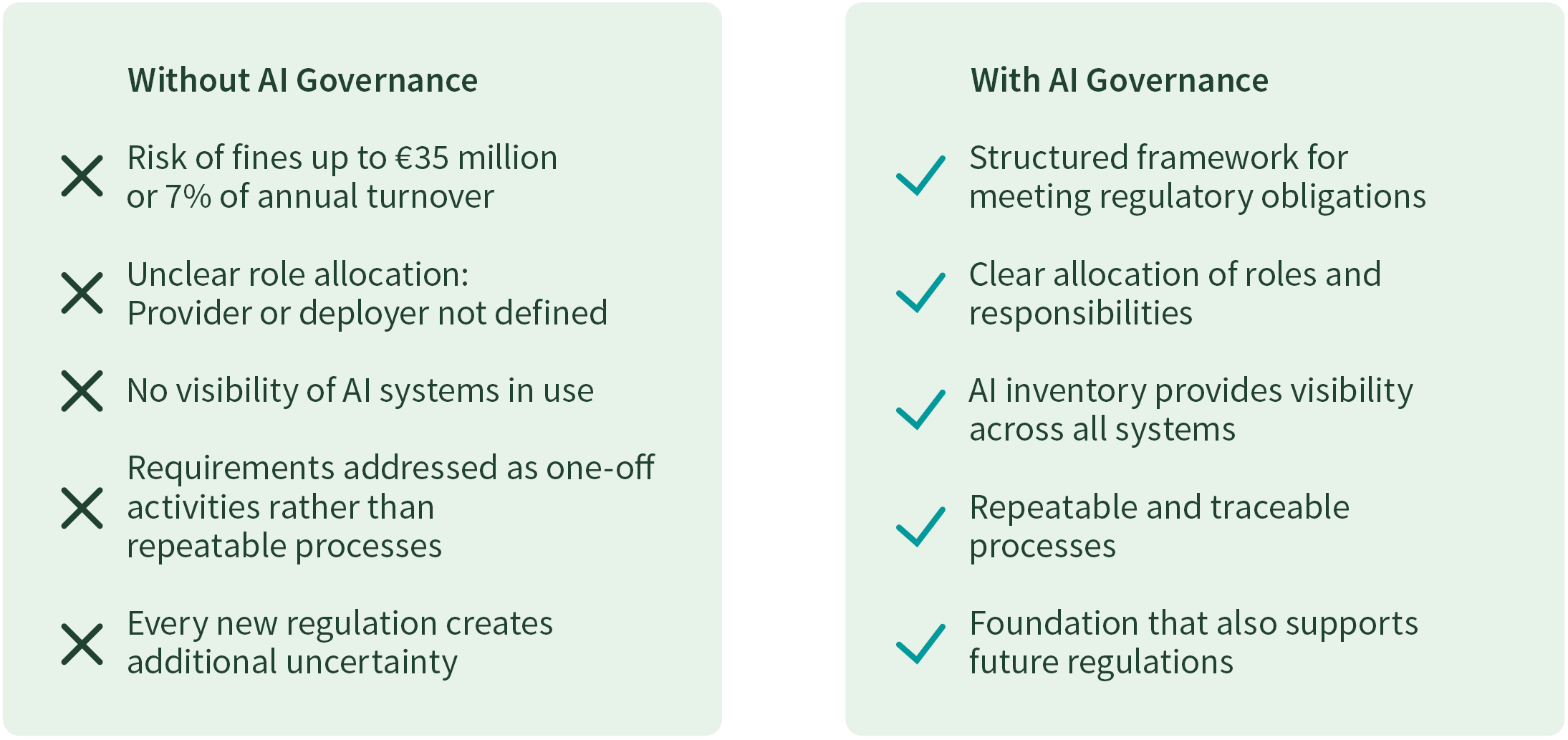
Woodmark Consulting helps your company establish effective AI governance from defining the target vision and determining roles and responsibilities to implementing an organization that complies with the EU AI Act.

Bilal Türkarslan has been working as a Consultant at Woodmark since July 2026. His areas of expertise include Data Governance, Data Architecture, and Metadata Management. Through his professional experience, he has gained extensive practical knowledge in designing data-driven processes, implementing solutions for metadata capture and management, and optimizing data and governance workflows.